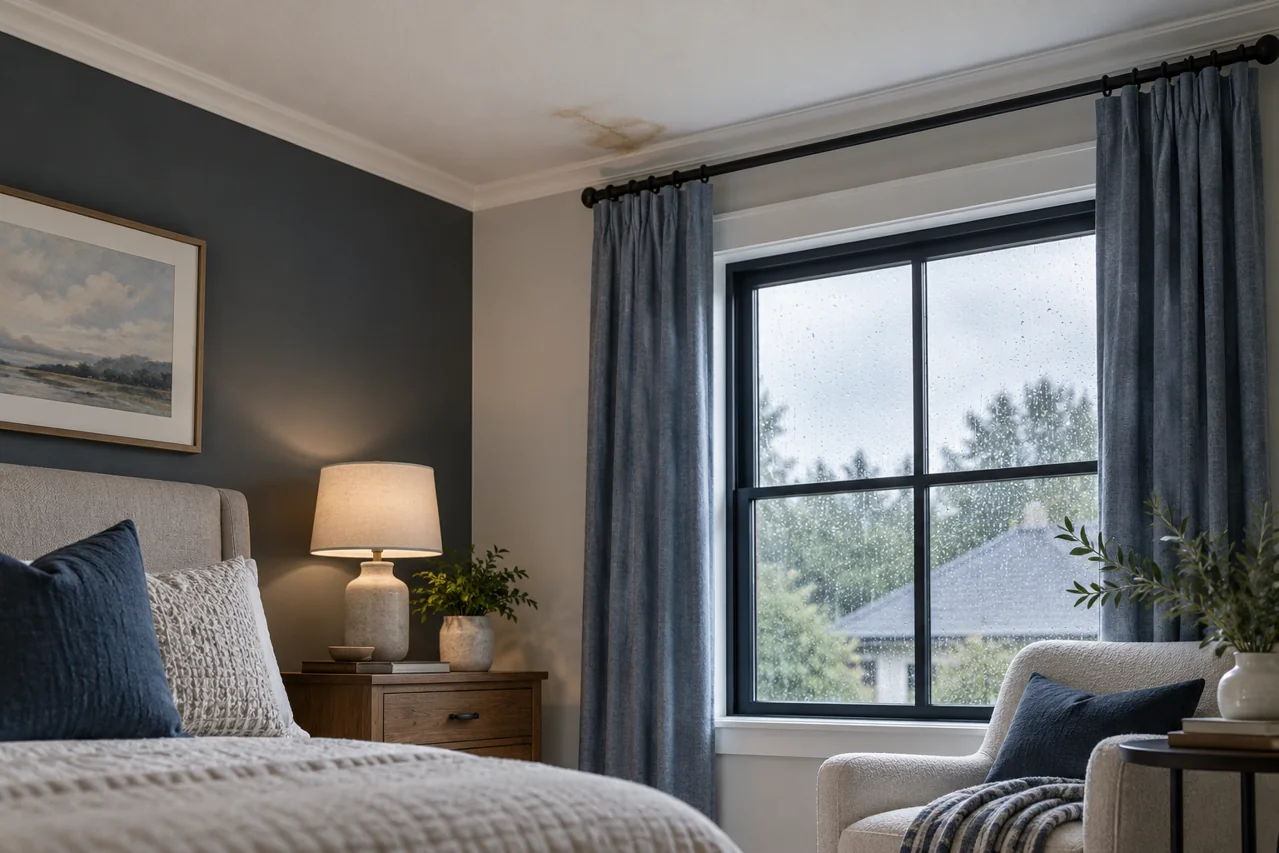
A brown mark on the ceiling is a reason to investigate, not enough information to identify a repair by itself. The useful first step is to note what changed, when it changed, and whether there are immediate safety concerns.
For Kalamazoo and Portage homeowners, a short record of observations can make the inspection conversation much more productive than trying to diagnose the roof from indoors.
Start with safety, not the camera
Stay away from a bulging ceiling, unstable material, or water near electrical fixtures. Do not stand beneath a visibly failing area to photograph it, and do not handle wet electrical equipment. If a building appears unsafe, leave the area and contact the appropriate emergency or qualified professional help. The National Weather Service advises staying out of damaged buildings and contacting local authorities about downed power lines after a tornado. National Weather Service: safety after a tornado
Move belongings only if you can do so safely. Do not enter an unsafe attic or climb onto the roof to search for the source.
Record the change you can observe
A new or expanding stain
Note the room and exact location. Take a photo from a safe position and write down whether the mark changes after rain, snowmelt, or another event. Keep the original photo so later observations can be compared.
Dripping or damp surfaces
Record when the water appears and whether it stops. Tell the professional if the problem is active rather than describing it only as an old stain. The timing helps frame the investigation without proving the source.
Accessible attic observations
If an attic area is safely accessible, report what you can see without walking on unsupported surfaces or touching suspect equipment. Wet insulation or visibly deteriorated materials warrant professional evaluation. DOE’s attic guidance identifies moisture signs as a reason to investigate how water is entering. DOE: guide to durable attics
Do not assume every ceiling mark starts at the roof
Plumbing, condensation, and other building conditions can also require investigation. Explain the symptoms to the professional and ask what evidence supports the diagnosis. A roofing assessment should distinguish an observed condition from an assumption.
If the proposed repair does not explain how it relates to the symptom, ask for a clearer account before agreeing to it. The purpose of the inspection is to narrow uncertainty, not replace one guess with another.
Bring the useful information to the appointment
Gather dates, photos, earlier repair invoices, and notes about recent storms or changes to the home. Identify which areas were previously repaired and whether the same symptom returned.
Ask the inspector to explain what was checked, what was found, and what remains inaccessible. If another trade is needed, clarify which part of the problem that specialist should evaluate.
Record the pattern before the inspection
A leak report becomes more useful when it includes timing, location, and change. “The bedroom ceiling stained after yesterday's rain” gives the contractor a starting point. “The roof is bad” does not identify a condition that can be investigated.
Use this log without entering an unsafe attic or climbing onto the roof:
| Detail | What to record |
|---|---|
| Location | Room, nearby wall or window, and approximate stain location |
| First noticed | Date and whether the mark was new or already present |
| Weather | Rain, wind-driven rain, snowmelt, or no obvious weather connection |
| Visible change | Active dripping, a growing mark, or no change since last observation |
| Earlier work | Date and scope of any previous repair in that area |
| Photos | Dated images taken from a safe position |
Why the stain is a clue rather than a repair specification
Roof leaks can involve damaged shingles, flashing at joints or penetrations, and other drainage details. GAF identifies deteriorated flashing around chimneys, skylights, and vents among common causes. An inspection needs to consider more than the visible shingle field. GAF: common roof leak causes
Ask the contractor to distinguish the place where water became visible from the suspected entry point. A proposed repair should explain the connection between those two observations. If the source is not confirmed, the report should say what further investigation is recommended.
For example, a hypothetical repair proposal that says only “seal roof leak” leaves important questions open. Which detail will be repaired? What material is being replaced or treated? What evidence supports that location? What happens if the symptom continues? A clear scope makes the work easier to evaluate and the follow-up easier to discuss.
Prepare for the visit without creating more work or risk
- Move belongings out of the affected area only if it is safe to do so.
- Keep people away from bulging ceilings and water near electrical equipment.
- Gather your previous roofing invoices, warranty documents, and photographs.
- Tell the contractor about access restrictions before the appointment.
- Describe active water intrusion when requesting help; do not assume an online form arranges emergency dispatch.
After work, keep the repair scope and completion photographs together. Ask when and how to report another occurrence. Cosmetic ceiling work should not be confused with evidence that the source has been resolved.
Read repair versus replacement if you have been offered both options. For symptoms associated with snowmelt, see Michigan ice dams.
Address the source before closing the conversation
Before repainting or closing out an interior repair, ask how the water source and drying needs will be addressed. Roof repair and interior restoration are different scopes; make sure you understand who is handling each.
Apex assesses roofing concerns and provides photos with recommended work. Request a free inspection and tell us about active water intrusion when we contact you so we can discuss availability and the next step.